May Day and Beltane: How to Celebrate British Spring Folklore Safely
October 10, 2026 - Folklore

October 02, 2026 - Legends
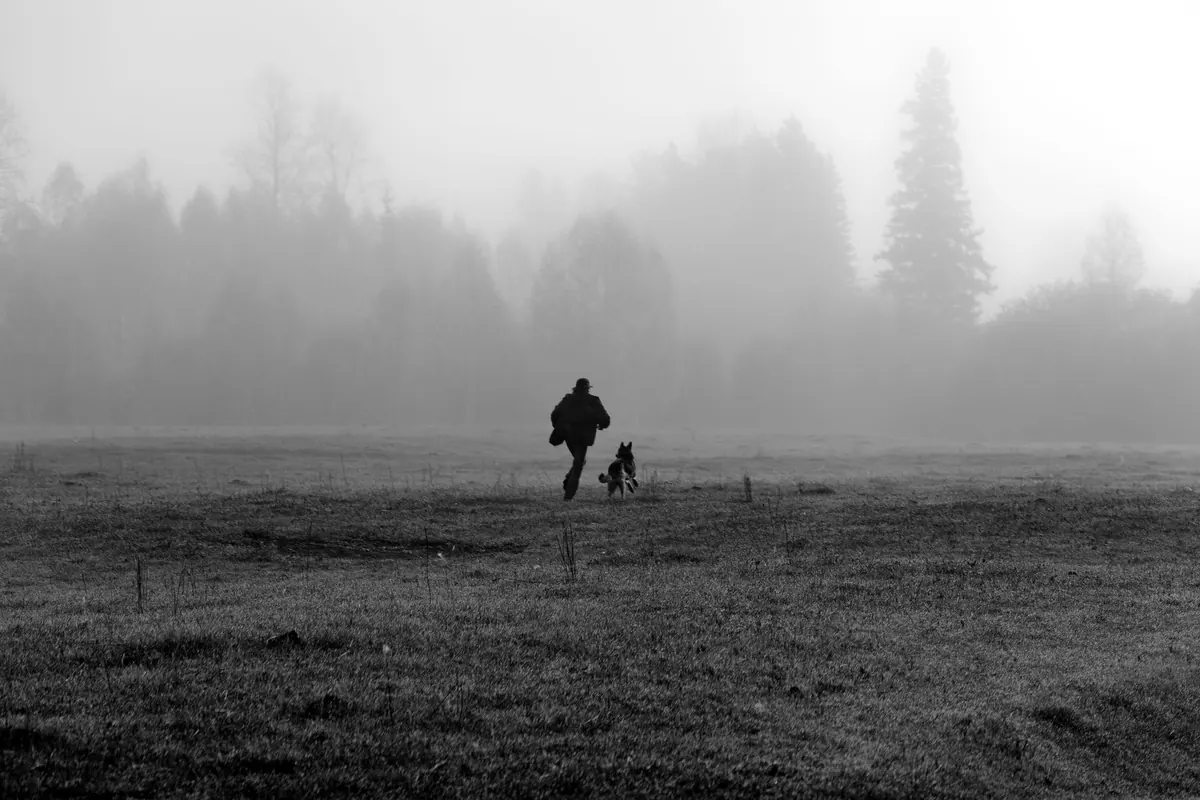
Dusk on a Norfolk lane, and something the size of a calf is standing in the road. It is black in a way that seems to swallow the light, its coat is shaggy as a doormat, and it makes no sound at all. Move the same scene to a Yorkshire causeway, a Welsh crossroads or a Manx castle guardroom and the details shift: the shriek, the burning eyes, the way the creature follows rather than blocks. Britain's phantom hounds are a family rather than one beast, and the differences between them say as much about their counties as about the dogs.
Across the British Isles the descriptions converge more often than they diverge. The dog is larger than any real breed, with a rough coat, ears that flop or drag, and eyes described as saucers, plates or burning coals. It appears at dusk or in the dead hours, usually on the road between places rather than inside a village: a lane, a bridge, a crossroads, a church path, a stretch of marsh.
Two habits recur. It either halts and bars the way, or it pads along behind a traveller, matching pace, until the walker reaches a gate, a boundary stone or a lit window and it is simply gone. Some are silent. Some shriek. Most are read as omens, though a respectable minority are guardians doing a job.
Shuck is the most famous of the breed and the most coastal. His name probably comes from an old word for a demon or shadow, and he belongs to the low, wet country of Norfolk and Suffolk, where sea frets roll in fast and lanes end in marsh. He is a storm dog more than a death dog.
The best-known account dates to 1577, when a pamphlet described a great black dog bursting into St Mary's Church at Bungay and Holy Trinity at Blythburgh during a violent thunderstorm, injuring and killing parishioners. At Blythburgh, the scorch marks on the north door were pointed out for centuries afterwards. Later tellings soften Shuck considerably; plenty of East Anglians will tell you he means no harm to those who leave him be. The name survives in local lane and field names.
Yorkshire and Lancashire produced a noisier, more complicated set. The barghest is a town omen, said to walk the streets of York and other northern settlements before a death or a disaster, sometimes attaching itself to a particular family. In Westmorland, the related Capelthwaite was remembered almost fondly, a barghest that would do chores about the farm as long as it was treated well.
Padfoot is quieter: a shaggy thing that follows travellers on dark roads, often felt rather than clearly seen. The Skriker, by contrast, is heard before it is seen, a shriek in the night from a dog with a headless or half-seen shape, and its cry was taken as a death portent. The Gytrash, also northern, is milder still, a dog or horse on a lonely road that may lead a traveller home or give them a fright; Charlotte Brontë borrowed the name in Jane Eyre when Jane mistakes Rochester's horse and dog for one.
Welsh tradition splits the subject in two. The gwyllgi, the dog of darkness, is closest to the English black dog: a huge black creature with fiery eyes and hot breath, met at crossroads and on lonely lanes at night, a sudden and unwelcome sight.
The Cŵn Annwn are something else entirely. These are the hounds of Annwn, the otherworld, and they are described as white with red ears rather than black. In the First Branch of the Mabinogion, Pwyll's meeting with that pack is how his story with Arawn begins. They hunt; they take souls; they are not omens so much as a different order of being. Worth keeping straight, because popular retellings often paint the Welsh hounds black and lose the point.
Headless dogs are the West Country's signature. The yeth hound of Devon, Cornwall and Somerset runs at night, sometimes with a sound like a pack approaching before anything is visible, and in some tellings is linked to the souls of children who died unbaptised. On Dartmoor, the Wisht Hounds hunt with a headless huntsman; wisht is West Country dialect for uncanny or eerie. These are pack traditions rather than solitary dogs, which makes them read differently: you do not meet a yeth hound, you hear it coming.
Not every black dog is a warning. The church grim, known in Lincolnshire, Yorkshire and well beyond, was the spirit of a dog buried in a churchyard or under the foundations to guard the church and its dead. In ghost form it was often a black dog seen in the churchyard at night, or a dog running ahead of a funeral. A grim is a custodian, and the stories about it are more protective than fearful.
If you are reading local accounts, or chasing one down in a county record office, four details will tell you what kind of dog you are dealing with:
Keep your head, keep your distance and do not follow it, particularly across a boundary such as a bridge, a gate or a stream. Note the time, the weather, the exact spot and which way it went; if anyone is with you, compare notes while it is fresh. Write it down the same evening and pass it to a local folklore archive or county record office rather than a national ghost-hunting website.
Then the sensible part. Most large black dogs seen at night are simply large dogs off the lead, and an unknown dog is not a story to approach. Do not run, do not stare it down, and do not try to photograph it from close range. Walk away steadily, put a gate or a parked car between you if you can, and if a dog is out of control or behaving aggressively, report it to your local dog warden or the police non-emergency line. Folklore is a pleasure; a genuine animal welfare problem needs a phone call, not a legend.
Photo: molochkomolochko / Pexels

May Day and Beltane mark the start of summer with dew, greenery, maypoles and fires. Here’s how to join in safely,...

A tour of the legends attached to Britain's standing stones — dancing maidens, wandering rocks and the Devil's poor...
Copyright © 2026 Wisp Patch. All Right Reserved.